
How to Store Bacteriostatic Water
Best Practices for Safe Laboratory Storage
Learn how to store bacteriostatic water correctly, including recommended storage conditions, handling practices and tips to help maintain product quality in laboratory environments. How to Store Bacteriostatic Water correctly helps maintain product quality…
🌡️ Store Correctly
☀️ Avoid Direct Sunlight
🔒 Keep Cap Secure
🧪 Laboratory Grade
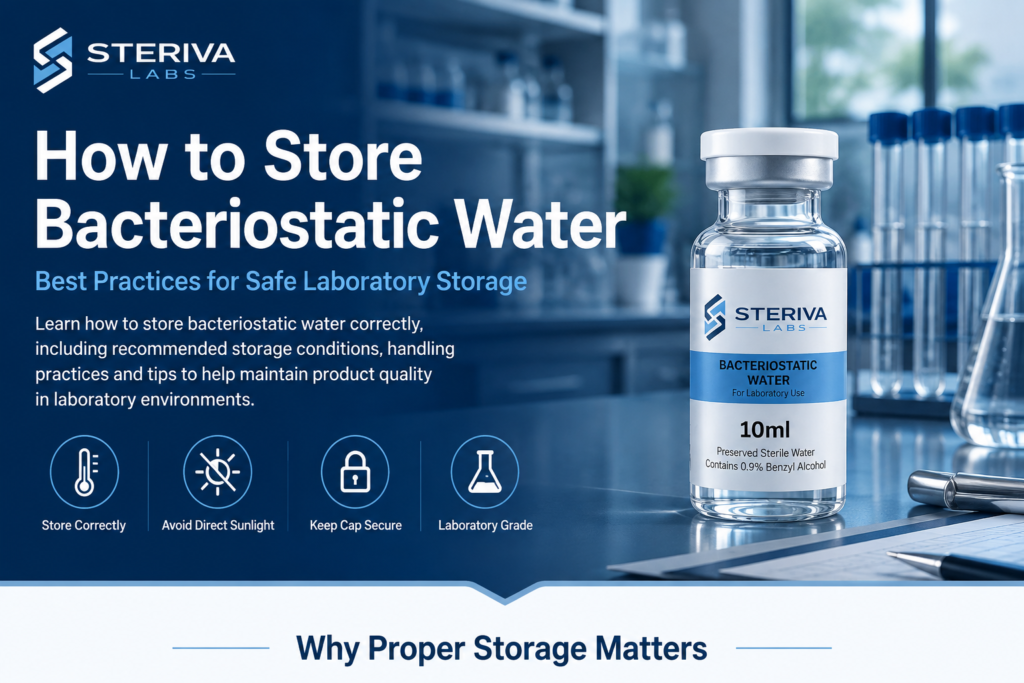
Proper storage plays an important role in maintaining the quality and integrity of bacteriostatic water throughout its intended laboratory use.
Although bacteriostatic water contains 0.9% benzyl alcohol to help inhibit bacterial growth after opening, correct storage conditions remain essential. Exposure to excessive heat, direct sunlight or poor handling practices may affect the product’s condition and reduce confidence in laboratory workflows.
Following the recommended storage guidance helps maintain product quality, supports reliable laboratory handling and ensures the vial remains in the best possible condition throughout its intended use.
Ideal Storage Conditions
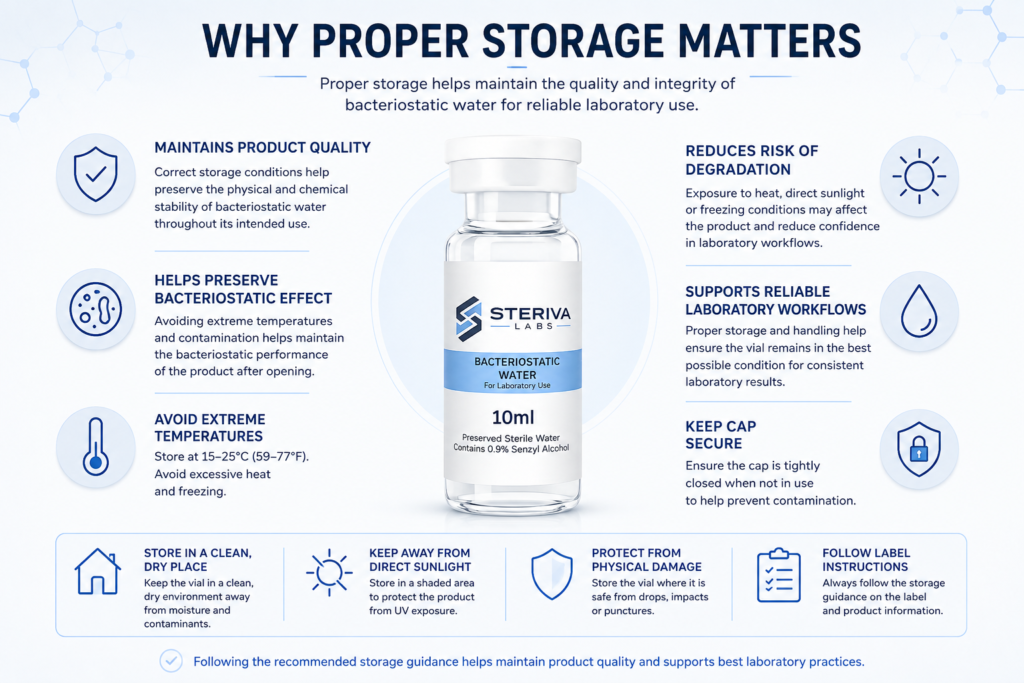
Following the recommended storage conditions helps maintain the quality of bacteriostatic water throughout its intended laboratory use.
For best results:
- Store in a clean, dry location.
- Keep away from direct sunlight.
- Avoid excessive heat or freezing conditions.
- Keep the protective cap securely in place when the vial is not in use.
- Store the vial where it is protected from unnecessary contamination or physical damage.
Always follow the storage guidance provided on the product label and any accompanying product information.
Handling After Opening
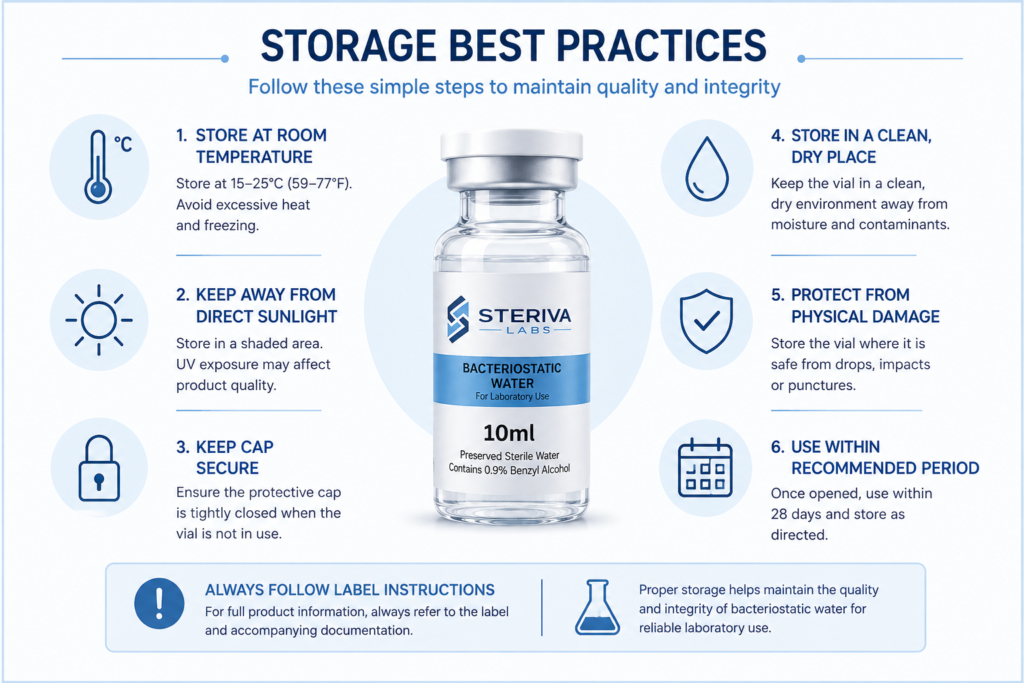
Once a vial of bacteriostatic water has been opened, careful handling becomes just as important as proper storage.
Each time the vial is accessed, appropriate laboratory techniques should be followed to help maintain product quality and reduce the risk of contamination. Before and after each use, inspect the vial and ensure the protective cap is securely replaced.
If the vial becomes damaged, contaminated, or its contents appear unusual, it should no longer be used. Always follow the product instructions supplied with the vial.
Good Laboratory Practice
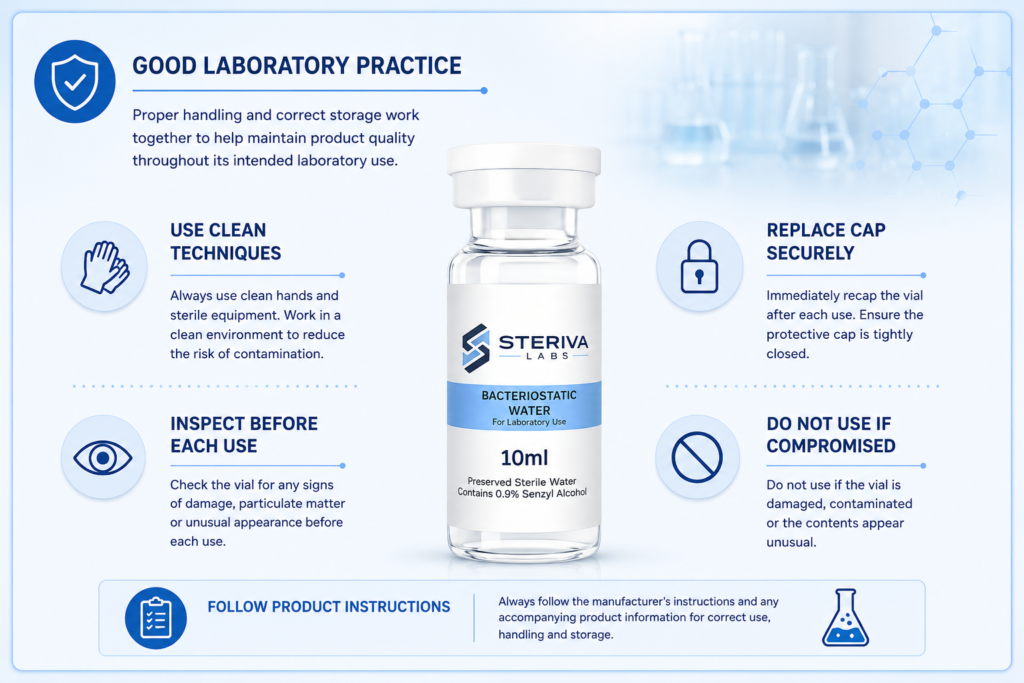
Proper handling and correct storage work together to help maintain product quality throughout its intended laboratory use.
Why Following Storage Guidance Is Important
Following the recommended storage guidance helps maintain the quality and condition of bacteriostatic water throughout its intended laboratory use. Good storage practices reduce unnecessary exposure to heat, sunlight and environmental contaminants while helping preserve the product in the condition supplied. Combined with appropriate laboratory handling techniques, correct storage supports consistency, traceability and confidence when using laboratory grade products. Always follow the manufacturer’s instructions and the information provided on the product label.
Frequently Asked Questions
Continue Learning
Looking for Laboratory Grade Bacteriostatic Water?
Steriva Labs supplies professionally presented laboratory-grade bacteriostatic water with clear labelling, quality focused packaging and fast UK dispatch.
Explore our laboratory products and order with confidence. This guide explains how to store bacteriostatic water using good laboratory storage practices.
Further Information
Steriva Labs recommends following the product instructions supplied with each vial. You may also find our guides on What is Bacteriostatic Water? and recognised laboratory guidance published by the World Health Organization helpful for understanding good laboratory practices.