
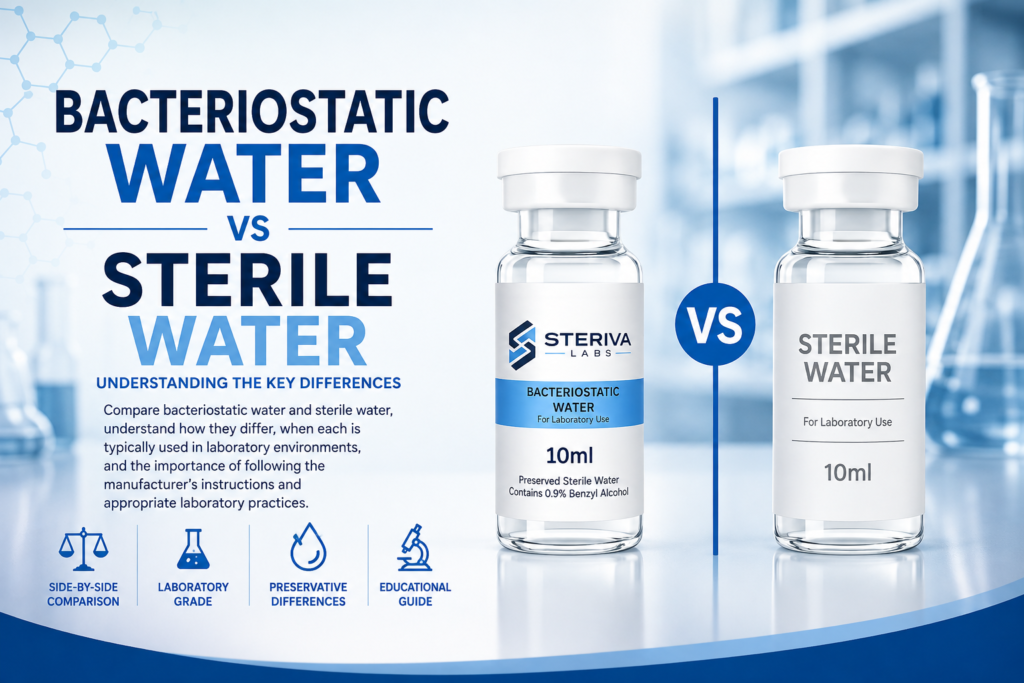
Bacteriostatic Water vs Sterile Water
Understanding the Key Differences
Compare bacteriostatic water and sterile water, understand how they differ, when each is typically used in laboratory environments, and the importance of following the manufacturer’s instructions and appropriate laboratory practices.
⚖️ Side-by-Side Comparison
🧪 Laboratory Grade
💧 Preservative Differences
🔬 Educational Guide
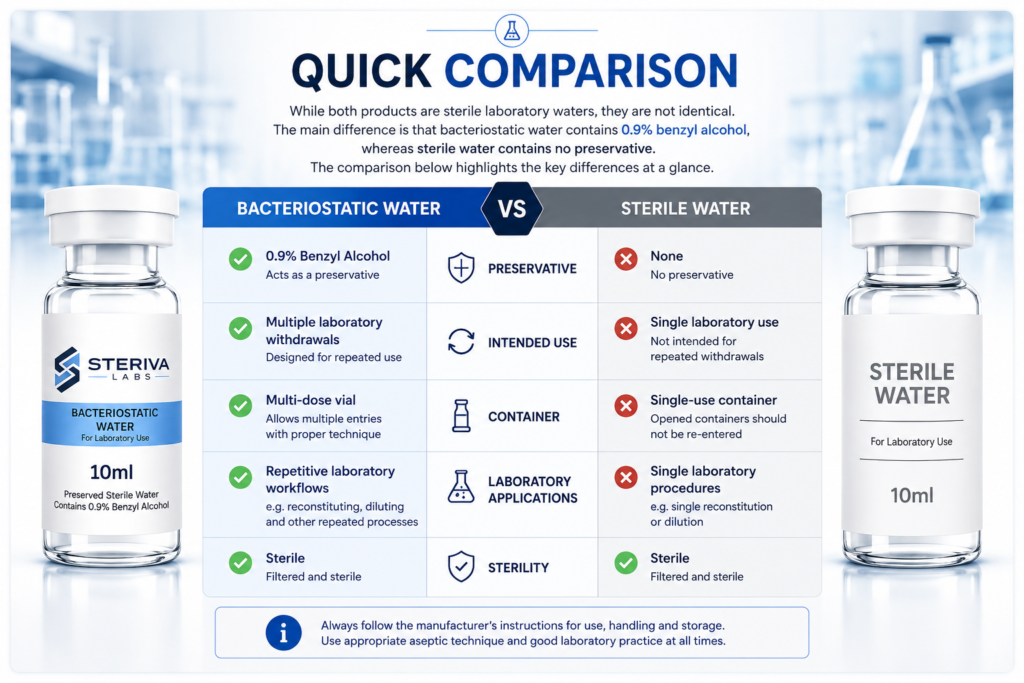
Quick Comparison
While both products are sterile laboratory waters, they are not identical. The main difference is that bacteriostatic water contains 0.9% benzyl alcohol, whereas sterile water contains no preservative. The comparison below highlights the key differences at a glance.
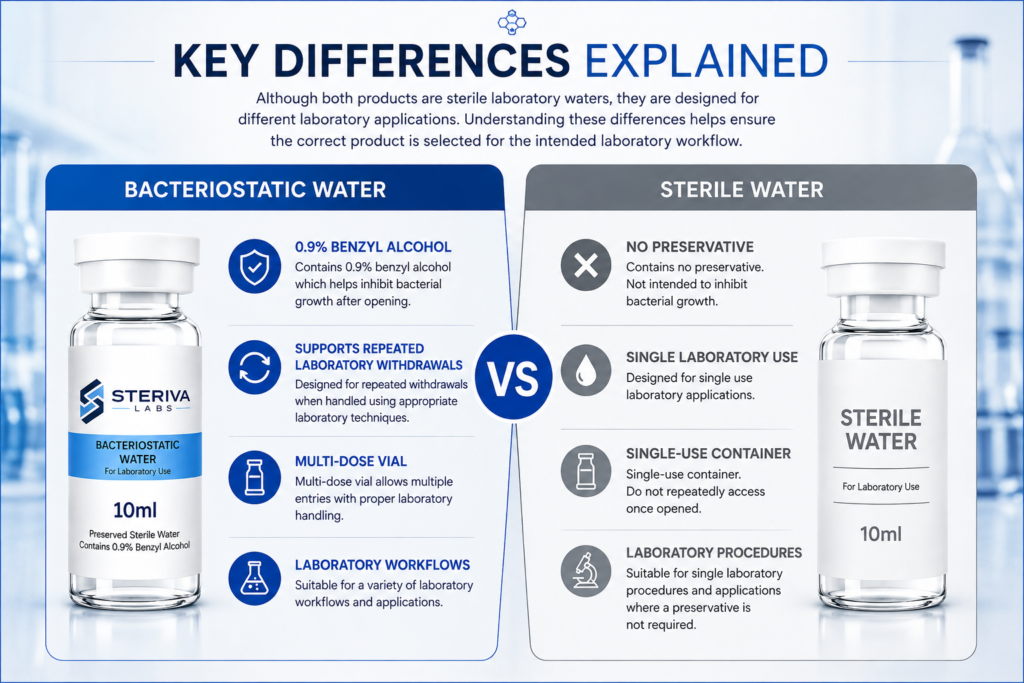
Key Differences Explained
Although both products are sterile laboratory waters, they are designed for different laboratory applications. Understanding these differences helps ensure the correct product is selected for the intended laboratory workflow.
Preservative
Bacteriostatic water contains 0.9% benzyl alcohol, which helps inhibit bacterial growth after the vial has been opened. Sterile water contains no preservative and is generally intended for single-use laboratory applications.
Preservative and Laboratory Handling
Bacteriostatic water contains 0.9% benzyl alcohol as a bacteriostatic preservative. Sterile water contains no preservative. Appropriate storage, handling and manufacturer instructions should always be followed for either product.
Laboratory Applications
Both products are used in laboratory environments; however, the intended workflow may differ depending on the product selected. Always follow the manufacturer’s instructions and use the product only for its intended laboratory purpose.
Storage
Both products should be stored according to the manufacturer’s instructions in a clean, dry environment away from unsuitable storage conditions. Proper storage helps maintain product quality throughout its intended laboratory use.
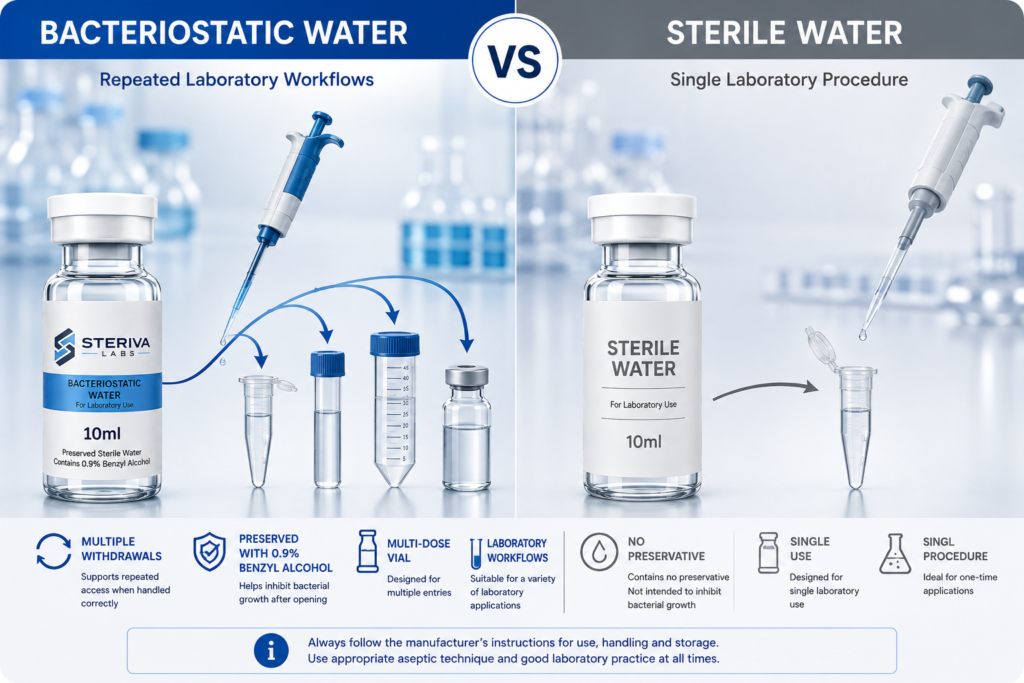
Typical Laboratory Applications
Both bacteriostatic water and sterile water are used in laboratory environments, but they may be selected for different workflows depending on the intended application and the manufacturer’s instructions.
🧪 Bacteriostatic Water
- Laboratory solution preparation
- Repeated laboratory workflows
- Controlled laboratory handling
- Laboratory workflows requiring preserved sterile water
💧 Sterile Water
- Single laboratory procedures
- One-time solution preparation
- Single-use laboratory applications
- Procedures where a preservative is not required
Important
Always select the appropriate laboratory product for its intended use and follow the manufacturer’s instructions supplied with the product.
Laboratory Applications Illustration
Frequently Asked Questions
Continue Learning
Looking for Laboratory Grade Bacteriostatic Water?
Steriva Labs supplies professionally presented laboratory grade bacteriostatic water with clear labelling, quality-focused packaging and fast UK dispatch. Explore our laboratory products and order with confidence.
Further Information
Steriva Labs recommends following the product instructions supplied with each vial. You may also find our guides on What is Bacteriostatic Water? and How to Store Bacteriostatic Water helpful, alongside recognised laboratory guidance published by the World Health Organization.